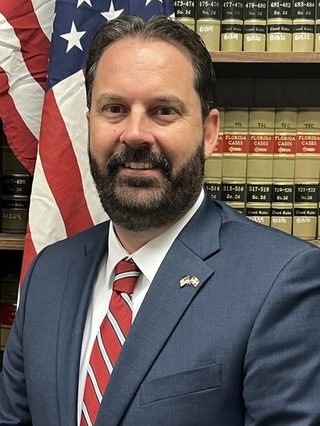
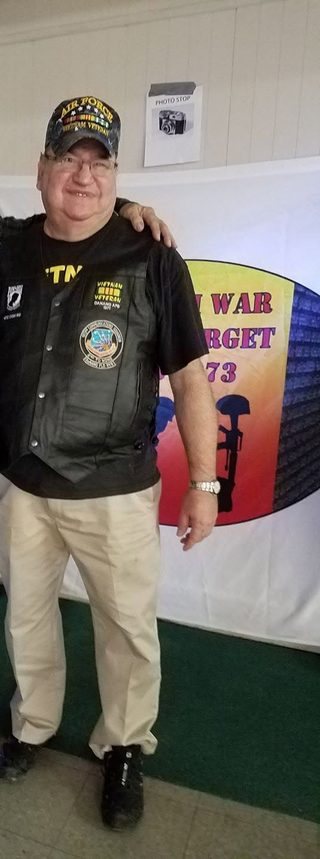
Travis Edwards was never a mystery to the state. It committed him. It dismissed his charges. It released him. At every step, Florida law allowed him to be released with no conditions. Marsy's Law promised the victims notice, and no one delivered it. Karen's Law puts that duty in writing.
What Florida's forensic system looks like, from the most recent sources we found. Each figure links to its source and date.
These are not isolated incidents. Each case shares the same root failure: no mandatory framework ensuring conditions are set and enforced before release. In the Edwards case, no conditions were set. In the other three cases, placements or conditions existed but were not monitored or enforced, and the Bojeh case involves an insanity acquittee, a related but distinct category. Karen's Law targets the first gap: nothing requires conditions before release. The WKMG House of Cards investigation documented additional cases beyond the four featured here. The pattern is systemic, not isolated.
Charged with burglary with battery after a May 2023 attack on his mother and her boyfriend, then declared incompetent to stand trial and released on court-approved conditions that included treatment through Centerstone of Florida. Centerstone placed him at an unlicensed group home run by a woman with prior cocaine convictions and no mental health training, a home Bradenton police and EMS had been called to over 100 times since 2021. He left within hours of arriving, and the court appears to have taken no action. He had not been found by November 10, 2023, when he murdered his mother and her boyfriend, the same two people he was charged with attacking. His family says they were never told he had been released. His aunt says she repeatedly begged authorities to protect his mother. After the Sarasota Herald-Tribune investigation, Centerstone removed its four top Florida administrators in March 2026. A wrongful death lawsuit against Centerstone appears to have been settled, according to court records. On April 6, 2026, a judge found Matejcek guilty of two counts of first-degree murder and sentenced him to life without parole. Manatee County Commissioner Amanda Ballard is working to start a local task force to track group homes.
Unlicensed placement · Conditions unenforced · Convicted April 2026Acquitted by reason of insanity in 2022 in a 2021 attempted-murder case. Released on conditions that included no access to firearms, a treatment plan, and prescribed medication. Court documents say he stopped taking his medication in June 2025. On January 17, 2026, three tourists waiting for help with a rental car were shot and killed in front of a vacation rental next door to his family's home. Bojeh is accused in their deaths and was indicted on three counts of first-degree murder. Deputies recovered two firearms from his home. In September 2026 a judge ruled him competent to stand trial; the next hearings are set for November 17 and 18.
Conditional release · Medication stopped · Charged in 3 deathsOn January 28, 2000, Travis Edwards was arrested for domestic violence. In September 2000 he was found guilty of battery domestic violence and resisting arrest without violence. Charges of aggravated assault on a law enforcement officer and aggravated assault domestic violence were dropped. The court gave him one year of probation. Four years later he was charged with murdering Karen Muscovitz and holding J. Dunn hostage at gunpoint for 36 hours. Found incompetent in 2004, he was later tried, convicted by a jury, and sentenced to two life terms in 2010. The Fifth District Court of Appeal vacated that conviction in 2012. On remand he was found incompetent again, leading to dismissal in 2018 and civil commitment under Chapter 394. On December 9, 2022, DCF issued a Notice of Anticipated Discharge to the State Attorney's Office. It proposes no conditions and does not list the victims. Karen's family and J. Dunn found out about a year after his release, with no notification from the state.
No notification. No conditions.Declared incompetent to stand trial in 2018, placed in the care of Centerstone of Florida by a Manatee County judge, and allowed to live with his father in Lakeland during treatment. He left Lakeland, traveled to Vidalia, Georgia, and killed a 31-year-old woman working in a clothing store. Centerstone didn't know he had left Florida until he had been jailed for a year. Centerstone agreed to a $6 million wrongful death settlement. He is serving a life sentence. Centerstone was also the provider in the Thomas Matejcek case five years later.
Monitoring failed: 1 killed · $6M settlement"Florida has the tools. Florida has the authority. Florida has documented proof of failure. What Florida lacks is the mandate to act. Karen's Law is that mandate."
J. Dunn · Trapped by the SystemAfter the charges were dismissed in 2018, nearly five years passed before his release. The court's order told the hospital to notify the State Attorney. It never mentions the victims.
A court placed Travis Edwards under private guardianship with no backup plan required. No state supervisor assigned. No contingency built in. This was the state's first failure.
Travis Edwards is arrested for domestic violence. In September 2000 he is found guilty of battery domestic violence and resisting arrest without violence. Charges of aggravated assault on a law enforcement officer and aggravated assault domestic violence are dropped. Given one year of probation.
On January 4, 2004, Karen Muscovitz is murdered, and J. Dunn is taken hostage at gunpoint for 36 hours. In 2009 a jury convicts Travis Edwards of first-degree murder and kidnapping, and in January 2010 he is sentenced to two life terms. J. Dunn was never told about key court dates, including the sentencing, and was never given the chance to give a victim impact statement.
Karen Muscovitz is murdered shortly before J. Dunn arrives. Edwards takes Dunn hostage at gunpoint. The siege ends 36 hours later.
SWAT rescues J. Dunn after 36 hours held at gunpoint. Edwards is taken into custody. Watch the footage ↓
Found incompetent to stand trial. Committed to Northeast Florida State Hospital under Chapter 916. Charges pending restoration of competency.
Competency restored in 2005. Case reopened. A jury convicts Edwards of first-degree murder and kidnapping. Five years after Karen's death, a courtroom finally says what happened to her.
Two life sentences, no parole. The judge calls it what it is. Karen's father says he can finally sleep. Edwards' own attorney tells the court he belongs in a mental hospital, not a prison. Nobody listens. Eight years later, the system agrees with him anyway. J. Dunn was never told about the sentencing or other key court dates, and was never given the chance to give a victim impact statement. He learned the outcome from the newspaper.
The Fifth District Court of Appeal vacates the conviction in 2012 and orders a new trial. On remand Edwards is found incompetent again. After 14 years in the system and five consecutive years of incompetence, charges are dismissed under §916.145: the five-year rule. The court commits Edwards civilly under §394.467 and directs the hospital to notify the State Attorney at least 30 days before release. The order does not mention the victims.
View the court order (PDF)DCF notifies the Brevard County State Attorney's Office of Travis Edwards' impending release, copying 10 people/agencies to the notification letter but not the victims. The letter proposes no conditions. Karen's family and J. Dunn are not on the list. DCF followed its own rules. Its discharge procedure (CFOP 155-17, §6.e) requires 30 days' notice to the state attorney for patients like Edwards. It never mentions victims.
View the DCF letter (PDF)Travis Edwards is released. His Recovery Team determined he no longer meets involuntary commitment criteria. No court-ordered conditions followed. Karen's family and J. Dunn were not notified.
J. Dunn and Karen's family discover Edwards was released: not from the state, not from DCF, but by calling to check his status themselves. The state never called. The state never wrote. No one notified them.
Marsy's Law, in Florida's Constitution since January 2019, gives victims the right, on request, to timely notice of a defendant's release. It was in force when Edwards was released. J. Dunn had asked to be notified if Edwards was ever released. Karen's family and J. Dunn say that right was violated. Florida law requires jails to try to notify victims within 4 hours of a release (§960.001(1)(f)). For a release from a forensic hospital, that statute sets no deadline and names no one responsible. Read §960.001 · Read Art. I, §16
The state had two decision points, 2018 and 2023. At neither did Florida law require release conditions. Marsy's Law already required notice to the victims, but Chapter 916 gives no agency the job of delivering it. Karen's Law assigns that job to DCF.
Arnie Muscovitz flew to Florida dozens of times over twenty years fighting for his daughter.
When the man convicted of her murder was released, nobody called him.
He found out by dialing the number himself.
No one made that call. Karen's Law makes it mandatory.
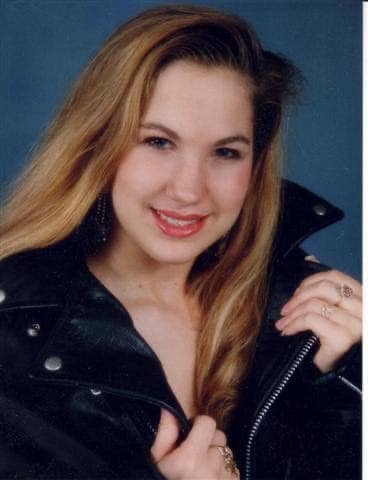
1976 - 2004
Twenty-seven years old. Murdered. The man charged with killing her walked free with no court-ordered conditions and no notice to her family, even though Florida's Constitution promised that notice. Karen's Law is named so it doesn't happen to another family.
Karen's Law is named in her memory.
"This book was written from the person that was kidnapped when my daughter was murdered. He tells a compelling story of what happened to him. He is trying to change the law in Florida so the next time it happens that they won't have to go through what we had to deal with."
Case No. 05-2004-CF-051843
“Travis Edwards was released with no court-ordered conditions, no proximity restriction, nothing barring him from walking down my street. Nothing in Florida law stops him from knocking on anyone's door, including mine.”
J. Dunn, victim of record
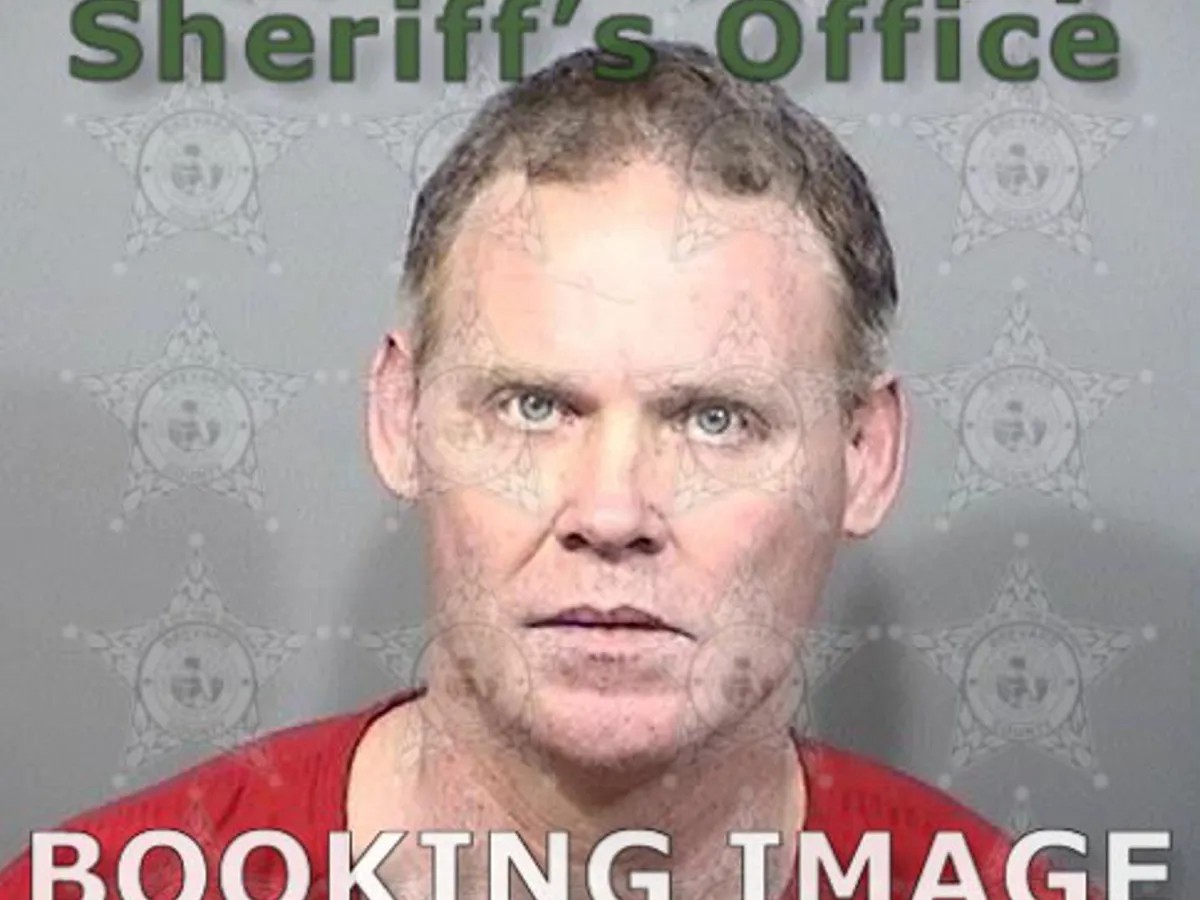
This is the most recent photo of Travis Edwards available to the public. We have not found an updated public photo from his 2023 discharge.
Photo: Sheriff's Office (public record)
Florida was spending more than $210M a year on forensic commitment as of 2010, and the sources we reviewed report none of these outcomes. You cannot fix what you do not measure.
When a person committed under Chapter 916 is judged unlikely to regain competency, DCF's treatment team may consider recommending release without legal conditions, or civil commitment under Chapter 394. If civil commitment follows, the criminal case may be dismissed.
House staff analysis, CS/HB 201 (2023) →the rearrest rate for patients directly discharged from California state hospitals compared with those released through CONREP supervision, in California's own 2024 analysis. At one year: 21.32% vs. 3.02%. Observational comparison; CONREP patients are selected.
CA Dept. of State Hospitals CONREP Effectiveness Study, 2024 →Capacity
DCF data cited by WKMG shows Florida's forensic mental health facilities operating at about 98% capacity, with waitlists growing roughly 6% a year.
WKMG House of Cards Investigation, April 2026 →Beds Needed
Ernst & Young's January 2025 analysis found Florida needs at least 1,602 additional forensic beds within five years just to maintain its current 98% occupancy. For fiscal year 2026, DCF requested $95.4M; the budget included $78.6M, with $19.6M released immediately and the rest held in reserve.
Prison Legal News, 2025, citing Ernst & Young →"If somebody reaches a certain level of treatment, then they're rushed out… to make room for someone else."
RETIRED CHIEF JUDGE BELVIN PERRY · WKMG HOUSE OF CARDS INVESTIGATION →"The whole system is built on a house of cards… and the only time something gets corrected is when there's a tragedy."
RETIRED CHIEF JUDGE BELVIN PERRY · WKMG HOUSE OF CARDS INVESTIGATION, APRIL 2026 →This is the system Travis Edwards moved through. An overcrowded, underfunded pipeline with no requirement of release conditions on the back end and no clear duty to tell victims of a forensic discharge. Karen's Law does not fix the bed shortage. It ensures that when someone walks out, victims are notified and release comes with conditions.
Karen's Law would pair two protections in one statute for violent-felony defendants found incompetent to proceed: mandatory conditions at release and automatic written notice to victims of record. In our 50-state review, we found no statute that does both. New York requires written notice to victims when such a defendant is discharged (CPL §730.60(6)), but does not require release conditions. Maine, Nevada, and Kentucky notify victims of these releases, but generally only when the victim asks. Ohio lets courts keep jurisdiction over some unrestorable defendants charged with the most serious violent felonies. Karen's Law would combine notice and conditions.
The population this protects is growing: between 1999 and 2014, the number of incompetent-to-stand-trial patients in state psychiatric hospitals rose 72% across the 27 states with complete data, and many states have reported increases since. Wik, Hollen & Fisher, NASMHPD, 2017 →
Florida Statute §916.17 already lets a court order conditional release. Karen's Law makes release conditions mandatory for defendants charged with a violent felony who are found incompetent to proceed, and guarantees victims 30 days' written notice before release.
"... the committing court may order a conditional release of any defendant in lieu of an involuntary commitment ... based upon an approved plan for providing appropriate outpatient care and treatment."
Ordering conditional release is optional. When a court does order it, the plan must include supervision and outpatient services, and the court must require periodic compliance reports. The statute does not require medication verification or notice to victims.
Result: Conditional release is optional"For a defendant found incompetent to proceed who is charged with a forcible felony as defined in s. 776.08, the order of conditional release must include, at a minimum, the following conditions: (a) Compliance with prescribed medication and treatment. (b) Supervision by the department or its designee. (c) Periodic reports to the court regarding the defendant's compliance and progress, with copies to the state attorney."
Draft text, subject to revision by legislative drafting staff.
Informed by outcome data from CA CONREP · NY Kendra's Law · NC modelOnce a court discharges a defendant from court-supervised care, its jurisdiction ends (§916.17(3)). Karen's Law acts before that point.
The core change for violent felonies
The 2026 Florida legislative session has ended. Karen's Law targets 2027. The work starts now, building legislative pressure before the session opens.
Status, October 2026: No bill has been filed yet. The campaign is seeking a sponsor for the 2027 session, which begins March 2, 2027.
Find your Florida senator and representative, then send them the message below. Personal constituent contact moves votes. Find your legislators
I'm a Florida constituent, and I'm asking you to support Karen's Law in the 2027 session. It would amend Florida Statute §916.17 to require minimum release conditions, including medication compliance and DCF supervision, for defendants charged with a violent felony and found incompetent to proceed, with written notice to victims at least 30 days before release. No new agency is needed. The case behind it: https://trappedbythesystem.com/brief. Thank you.
If you asked to be notified and weren't when your offender was released, your rights under Article I §16(b) may have been violated. Consider contacting a victims' rights attorney. Find help: Marsy's Law for Florida →
VINE is the notification service used by many Florida jails and prisons. Register for the protections that exist today, and ask the Department of Children and Families in writing how to be told of a forensic hospital discharge. vinelink.com →
Every court date. Every failure. Every human cost. Trapped by the System by J. Dunn is the documented case for Karen's Law. Available now on Kindle. Own it →
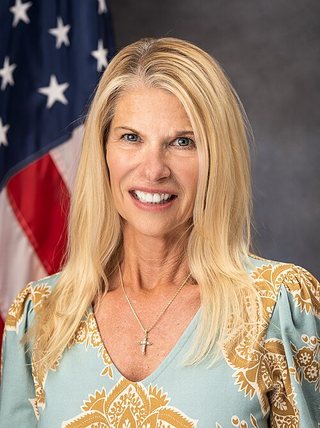
Represents part of Brevard County. Karen's Law grew out of a case in Brevard County, and this campaign welcomes Senator Mayfield's leadership as the 2027 session approaches.
Write to Senator Mayfield →
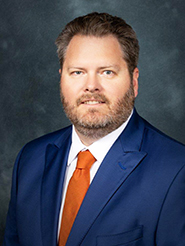
His 2026 bill, SB 1326, took on how Florida's criminal courts handle defendants with mental illness. Karen's Law is a narrow complement to that work, one change to §916.17 for the 2027 session, and the campaign would be honored to work with his office.
Write to Senator Martin →
The events in the Travis Edwards case took place before State Attorney Scheiner took office in January 2025. The campaign wrote to his office on March 28, 2026 about victim notification under Marsy's Law, and again on July 24, 2026 with an invitation to work together on Karen's Law.
In the Edwards case, DCF's Notice of Anticipated Discharge went to the State Attorney's Office, which makes his office a natural place for a simple fix: making sure victims of record are added to that list.
As State Attorney for the 18th Judicial Circuit, he is well placed to help Florida lead on this issue, and the campaign would welcome his partnership.
Read his swearing-in announcement →
After his daughter Karen was murdered in Melbourne, Florida in 2004, Arnie became chairman of the Merrimack Valley Chapter of Parents of Murdered Children in 2009. He flew to Florida dozens of times over twenty years fighting for justice. He received a proclamation from the Mayor of Lowell for his advocacy work. He found out Travis was released by calling to check himself. No one had notified him. He supports Karen's Law.
pomc.org →These constitutional rights are self-executing under Article I §16(b), and victims can assert them in court (§16(c)). A victims' rights attorney can help. If you asked to be notified and were not told when your offender was released from a forensic facility, that is the gap Karen's Law targets.
Find help: Marsy's Law for Florida →Victim support, legal rights, and mental health policy organizations working on the same issues this campaign documents.
This is real footage from the standoff described above. Neighbors recorded it. News cameras captured the SWAT response, the teargas, the moment J. Dunn was rescued. In 1999, a court placed Travis Edwards under private guardianship with no backup plan required. When that guardian was arrested in December 2003, there was no one to call. This was the state's first failure. Karen Muscovitz was left alone with him. About a week later, this is what happened.
Watch it. Share it. Show your legislators.
Florida's forensic release system is under scrutiny from journalists and investigators across the state. These are the reporters covering the same failures Karen's Law would fix.
After 22 Years, Karen Ann Muscovitz's Family Still Has Unanswered Questions
The Boston Herald covers the 22nd anniversary of Karen's murder and the family's ongoing fight for answers. It was the article that put Karen's story before a national New England audience and connected Arnie Muscovitz's advocacy directly to the Karen's Law campaign.
'House of Cards:' Mental Health Crisis in Florida's Criminal Justice System
Retired Chief Judge Belvin Perry: "The whole system is built on a house of cards… and the only time something gets corrected is when there's a tragedy." The report reviews the Bojeh case and strain on Florida's forensic system.
Double Murder Raises Questions About Mental Health Oversight and Unlicensed Housing in Florida
10 Investigates reports on how Thomas Matejcek, declared incompetent and ordered into treatment through Centerstone, was placed in an unlicensed group home and left within hours. The Sarasota Herald-Tribune's investigation of the placement led Centerstone to replace four top administrators. Covers the Case 01 failure on this page.
What a Wrongful Death Lawsuit Reveals About Gaps in Forensic Patient Care
The trade publication reports on the December 2025 wrongful death lawsuit against Centerstone, which denies wrongdoing, and notes an earlier 2018 Centerstone case at the same location (Case 04 on this page).
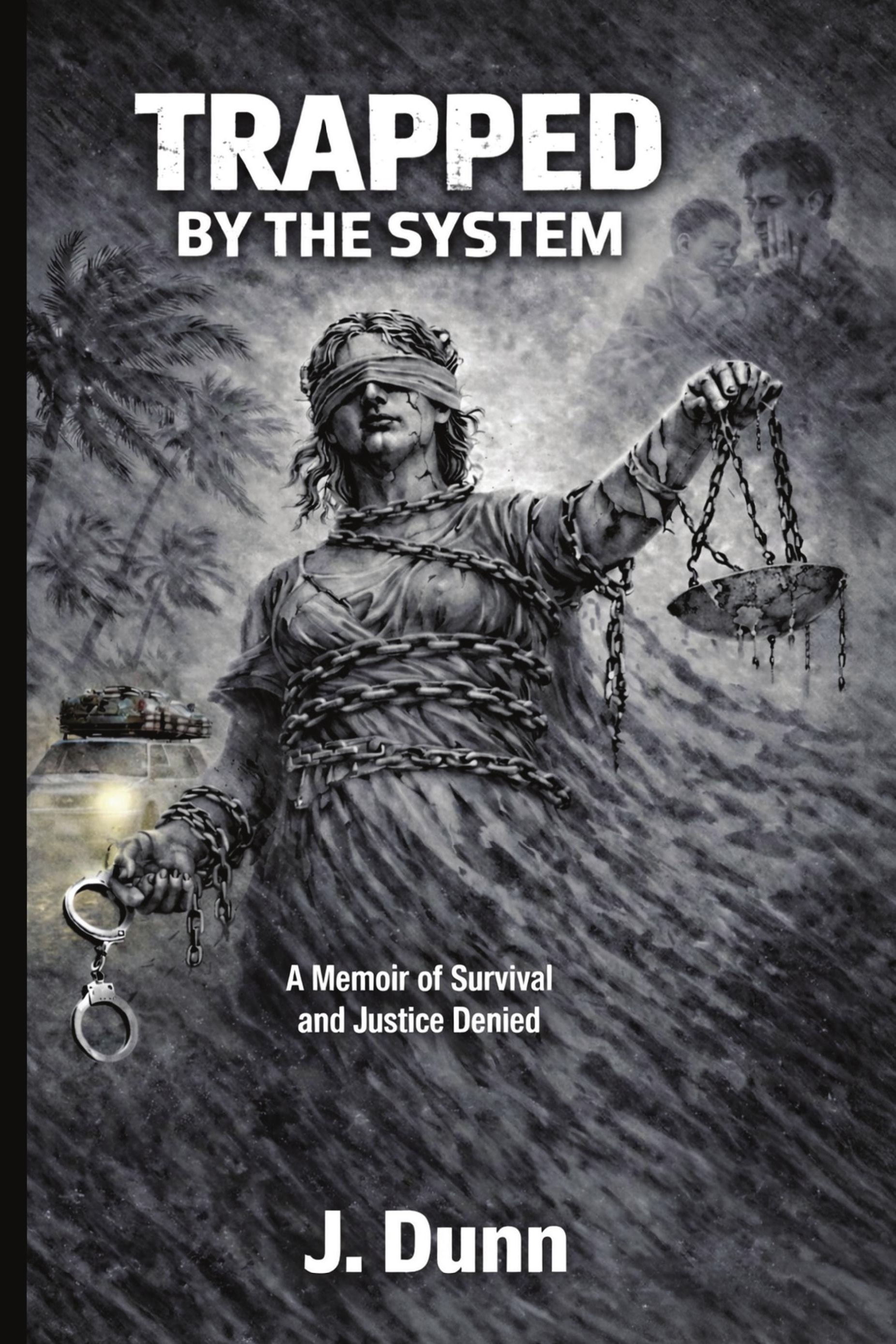
Trapped by the System isn't just a memoir. It's the record. The DCF discharge letter. The court order. The certified letter to State Attorney Scheiner. The key records are in its appendix. This is what you hand a legislator when they ask for proof.
Available Now: Kindle eBook $9.99 · Free with Kindle Unlimited
Order Kindle eBook: $9.99Most people don't get a second chance. J. Dunn has had three, and used every one of them to fight back.
In 1994, he took a bullet to the head and was carried out by EMS, alive against the odds, left paralyzed by injuries that have amounted to a life sentence of their own. Months later, he was staring down a first-degree felony: armed robbery, punishable by life, before the court found him mentally and physically unable to stand trial and the case fell apart. A decade later, he was taken hostage at gunpoint and held for 36 hours straight by the man later convicted of murdering Karen Ann Muscovitz, until SWAT ended it.
He didn't disappear after any of it. He wrote it all down in Trapped by the System: A Memoir of Survival and Justice Denied, exposing a system that dismissed charges, buried victims, and protected offenders over the people they hurt.
📖 Get the book on Amazon: Kindle (free with Kindle Unlimited)
Now he's turned survival into a mission. Father. Author. Survivor. Fighter. Dunn leads the campaign for Karen's Law, going after the same incompetency process that once carried him through, to force it to protect the next person instead.
"I know how the incompetency defense works because I've lived it from both sides, as the recipient of mercy and as the witness to its catastrophic absence."
J. Dunn went through the same incompetency-to-proceed process now at the center of Karen's Law. His credibility on this issue is not theoretical. It is documented, public record, and thirty years deep.
Forty-three minutes. The standoff, the years of court proceedings and commitments, the release nobody was told about, and every documented failure since. This is the full case for Karen's Law in one place.
Send this to your legislator. Send it to a reporter. Send it to anyone who needs the whole picture before the 2027 session opens.
Clips, new coverage, and how to help, posted as it happens.
Follow on Instagram