The majority of Florida forensic patients are released with zero conditions, zero monitoring, and zero victim notification. One amendment to existing law fixes this. Florida refuses to act.
These aren't projections. This is what Florida's forensic release system looks like right now.
These are not isolated incidents. Each case followed the same pattern: violent history, no mandatory monitoring, no enforcement, preventable outcome. The WKMG House of Cards investigation documented additional cases beyond the four featured here — the pattern is systemic, not isolated.
Declared incompetent to stand trial after a 2023 battery charge. Centerstone of Florida placed him in an unlicensed group home run by a convicted drug felon with no mental health training -- a home EMS had been called to over 100 times since 2021. He walked out after 15 minutes and wasn't found for two weeks. He murdered his mother and her boyfriend on November 10, 2023. His aunt had warned authorities he would kill someone. Nobody acted. Four Centerstone executives were fired after the Herald-Tribune investigation. A wrongful death lawsuit has been settled.
Unlicensed placement · Conditions unenforcedAcquitted by reason of insanity in 2022 for a prior attempted murder. Released with conditions including no firearms and mandatory mental health treatment. By 2024 filings showed compliance. In January 2026 he shot and killed three tourists waiting for help with their rental car outside his home. Two handguns were found under his bed.
Conditions failed: 3 killedOn January 28, 2000, Travis Edwards had a police standoff and was convicted of battery domestic violence and assaulting a law enforcement officer. The court fined him $211 and gave him probation. Four years later he murdered Karen Muscovitz and held J. Dunn hostage at gunpoint for 36 hours. He was committed under §916 for nineteen years. On December 9, 2022, DCF issued a Notice of Anticipated Discharge: zero conditions, zero notification. Karen's family and J. Dunn found out a full year after his release, with no notification from the state.
No notification. No conditions.Declared incompetent to stand trial after two felony assault charges: putting a knife to the throats of two women on successive days. Conditionally released and placed with Centerstone of Florida, assigned to live with his father in Lakeland. Centerstone lost track of him. He left Florida, moved to Georgia, and murdered a young woman during an armed robbery in Vidalia. Centerstone didn't know he had left the state until he had been jailed for a year. The victim's family received a $6 million wrongful death settlement from Centerstone. The same provider was responsible for Thomas Matejcek five years later.
Monitoring failed: 1 killed · $6M settlement"Florida has the tools. Florida has the authority. Florida has documented proof of failure. What Florida lacks is the mandate to act. Karen's Law is that mandate."
J. Dunn · Trapped by the SystemThe state had nearly two decades to prepare for the day it would release him. It chose not to.
Travis Edwards convicted of battery domestic violence and assaulting a law enforcement officer. Fined $211 and given probation. No mandatory mental health treatment ordered.
Travis Edwards murders Karen Muscovitz and holds J. Dunn hostage at gunpoint for 36 hours. SWAT responds. Edwards is taken into custody.
Found incompetent to stand trial. Committed to Northeast Florida State Hospital under Chapter 916. Charges pending restoration of competency. State begins receiving $165M+ annually to manage the forensic system.
After 14 years, charges dismissed under §916.145: the five-year rule. State recommits Edwards civilly. This was the moment to begin building a mandatory release plan. The state does nothing. Victims are not notified.
DCF issues Notice of Anticipated Discharge to the Brevard County State Attorney's Office. Zero conditions proposed. Zero victim notification. Karen's family and J. Dunn are not told.
Travis Edwards is released. His Recovery Team determined he no longer meets involuntary commitment criteria. Once that determination is made, the state loses all jurisdiction permanently. Zero conditions. Zero monitoring. Zero notification to victims.
J. Dunn and Karen's family discover Edwards was released: not from the state, not from DCF, but by calling to check his status themselves. The state never called. The state never wrote. Florida law required notification. It didn't happen.
The system had nineteen years and two specific decision points: 2018 and 2023: where it could have imposed mandatory conditions. It chose not to, both times. Karen's Law closes that gap permanently.
Arnie Muscovitz flew to Florida dozens of times over twenty years fighting for his daughter.
When the man who murdered her was released, nobody called him.
He found out by dialing the number himself.
Florida law required that call. It never came. Karen's Law makes it mandatory.
1976 - 2004
"Twenty-seven years old. Murdered. The man who killed her walked free with no conditions. No notification. No accountability. Karen's Law changes that."
Karen's Law is named in her memory.
Florida spends over $210M per year on forensic commitment and tracks none of these outcomes. You cannot fix what you refuse to measure.
of individuals are currently under Chapter 916 forensic commitment in Florida, discharged at a rate of hundreds per year with no mandatory tracking of what happens next.
Florida HB 201 Legislative Analysis, 2023 →in documented annual savings in California's CONREP program vs. full inpatient commitment. Florida has no equivalent data because it tracks no outcomes.
CA Dept. of State Hospitals CONREP Effectiveness Study, July 2024 →of victims in California's CONREP program call advance notification "very important." Florida victims currently receive no notification at all.
CA CONREP outcomes data →Capacity
Florida forensic mental health facilities are operating at 98% capacity. Waitlists are growing by 6% every year.
WKMG House of Cards Investigation, April 2026 →Waiting Beyond the Legal Limit
As of 2024, 772 defendants committed to mental health facilities were waiting beyond Florida's 15-day legal placement deadline. Average wait: 117 days for men, 125 for women.
Prison Legal News, 2025 →Beds Needed
Ernst & Young analysis found Florida needs at least 1,602 additional forensic beds within 5 years just to maintain current overcrowded levels. DCF requested $95.4M for 2026. The Legislature gave $9M.
Ernst & Young Florida Behavioral Health Gap Analysis →"When beds are limited, patients who show improvement may be released sooner than expected to make room for others. This is what happens."
PUBLIC DEFENDER MELISSA VICKERS · WKMG HOUSE OF CARDS INVESTIGATION →This is the system Travis Edwards moved through for nineteen years. An overcrowded, underfunded pipeline with no mandatory conditions on the back end and no obligation to tell victims anything. Karen's Law does not fix the bed shortage. It ensures that when someone walks out, victims are notified and conditions are enforced.
Florida isn't being asked to experiment. It's being asked to catch up. Three decades of mandatory conditional release data from states that already require it.
What the data shows about advance victim notification
Karen's Law is not asking Florida to do something new. It is asking Florida to do what it was already legally required to do, and didn't. These are the laws that were in effect when Travis Edwards was released. Every one of them was violated.
Victim Consent Required Before Dismissal
The law explicitly prohibits dismissal of charges when there is an identifiable victim who has not consented to the dismissal. J. Dunn is an identifiable victim. Karen Muscovitz's family are identifiable victims. The court dismissed the charges without ever contacting them. Nobody asked for their consent. Nobody told them it was required.
§916.145(1)(u), Florida Senate →Constitutional Right to Notification of Release
Florida voters approved Marsy's Law in 2018, giving crime victims the enforceable constitutional right to be notified before an offender is released. Travis Edwards was released in 2023. J. Dunn and Karen's family were not notified. They found out by calling to check his status themselves, more than a year after he walked free. A certified letter documenting this violation was sent to State Attorney Scheiner on March 28, 2026. No response has been received.
Marsy's Law for Florida →Statutory Right to Notice of Proceedings and Release
Florida's Victim Rights Act requires that victims be given timely notice of all proceedings and of an offender's release. This obligation exists independently of Marsy's Law and has been in Florida statute for decades. It was not followed. No notice was given before, during, or after Travis Edwards' discharge from state custody.
§960.001, Florida Statutes →Internal DCF Notification Requirements at Discharge
DCF's own internal operating procedures require registration and victim notification for forensic residents being discharged. These requirements exist within the agency regardless of statutory mandates. They were not followed in the Travis Edwards discharge. The agency issued a Notice of Anticipated Discharge on December 9, 2022 and notified no one.
Florida DCF Forensic Services →The state did not need Karen's Law to do the right thing in 2023. It needed to follow the laws already on the books. It didn't. Karen's Law ensures it never has a choice again.
Florida Statute §916.17 already permits conditional release. It says the court may order a conditional release. Karen's Law changes one word: and makes it mandatory for violent felonies.
"The committing court may order a conditional release of any defendant in lieu of an involuntary commitment."
No mandatory conditions. No medication monitoring. No supervision. No victim notification required. The court may add conditions, but in the majority of cases, it doesn't.
Result: Most released unconditionally"When charges involve a violent felony, dismissal due to incompetence shall be accompanied by a mandatory conditional release order specifying:"
Once a defendant no longer meets involuntary commitment criteria, the state loses all jurisdiction permanently. Karen's Law acts at the last moment the court retains legal authority to impose conditions.
The entire legislative change is one word in existing law
Florida Statute §916.145: the very law used to dismiss Travis Edwards' charges: contains a provision stating that charges may not be dismissed when there is an identifiable victim who has not consented to the dismissal.
J. Dunn is an identifiable victim. Karen Muscovitz's family are identifiable victims. The court dismissed the charges without ever contacting them. Nobody asked for their consent. Nobody told them it was required. §916.145(1)(u), Florida Senate: that language has been in the statute since 1983 and remains in the 2025 version.
The law that set him free required their permission first. They were never given the chance to say no.
The 2026 Florida legislative session has ended. Karen's Law targets 2027. The work starts now, building legislative pressure before the session opens.
Find your Florida district rep and send them this page. Tell them you support Karen's Law for 2027. Personal constituent contact moves votes. Find your rep →
If you weren't notified when your offender was released, your Florida constitutional rights under Article I §16(b) may have been violated. File with the Marsy's Law for Florida →
Florida's victim notification system covers jail and prison, not forensic commitment under Chapter 916. Register for the protections that exist while we fight to close the gap. vinelink.com →
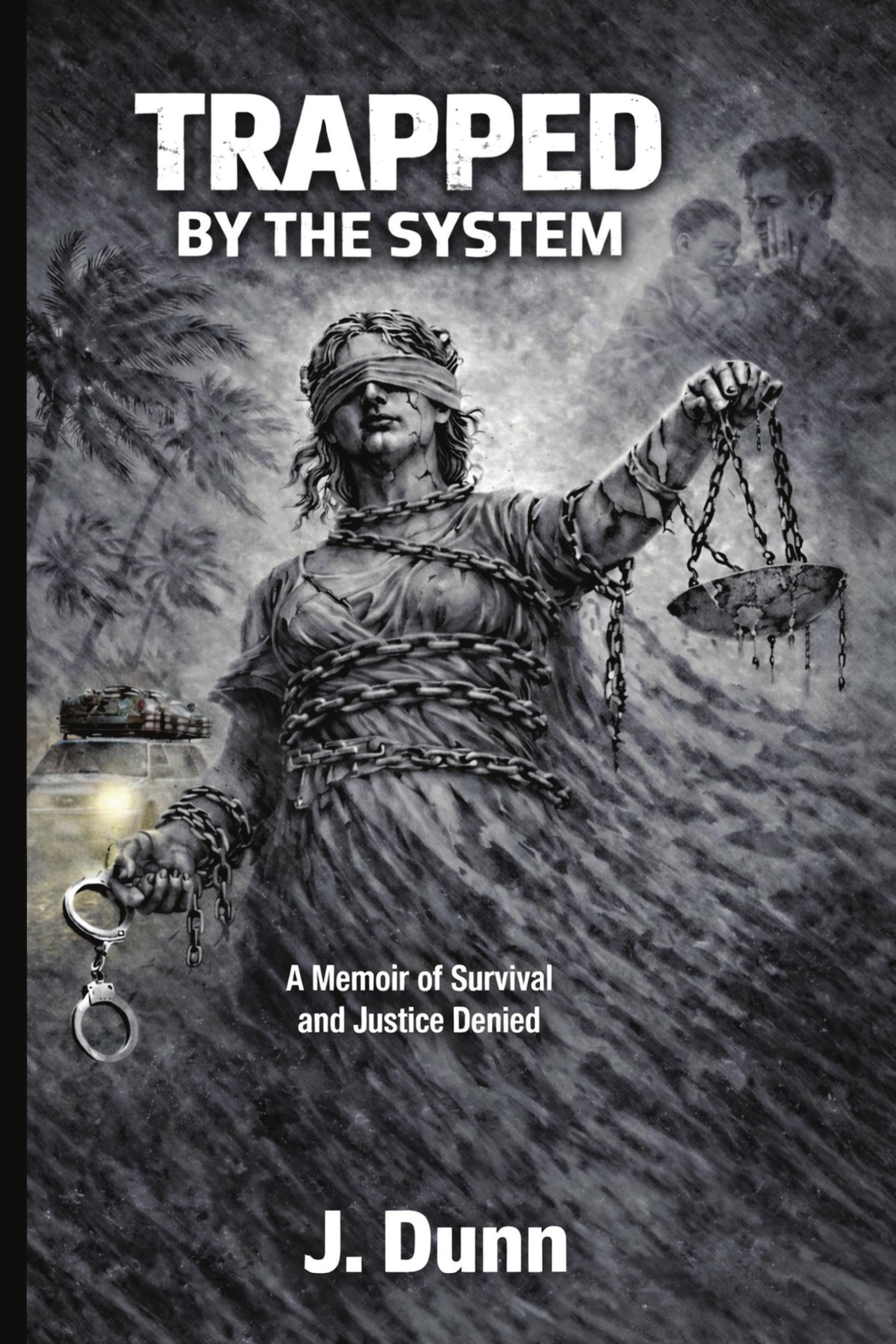
50,000 words. Every court date. Every failure. Every human cost. Trapped by the System by J. Dunn is the documented case for Karen's Law. Available now on Kindle. Order it →
Brevard and Indian River Counties. Primary Senate sponsor target for Karen's Law introduction in the 2027 session.
Contact Senator Mayfield →Volusia and Brevard Counties. District co-target for Karen's Law co-sponsorship in the 2027 session. Note: Sen. Wright is term-limited in 2026, his successor will be a key contact for the 2027 session.
Contact Senator Wright →On March 28, 2026, a certified letter was sent to State Attorney Scheiner documenting a Marsy's Law violation in the Travis Edwards case and requesting a written response within 30 days. The deadline was May 1, 2026. No response has been received.
"We are the voice for the voiceless, advocates for those who have been harmed, and champions of justice."
William Scheiner, swearing-in ceremony, January 2025
J. Dunn and Karen Muscovitz's family are still waiting for that voice.
sa18.org: his own words →After Travis Edwards murdered his daughter Karen in Melbourne, Florida in 2004, Arnie founded the Merrimack Valley Chapter of Parents of Murdered Children. He flew to Florida dozens of times over nearly two decades fighting for justice. He received a proclamation from the Mayor of Lowell for his advocacy work. He found out Travis was released by calling to check himself: the phone call the law required never came. He supports Karen's Law.
pomc.org →POMC was founded in 1978 after the murder of Lisa Hullinger. It is the only national organization dedicated solely to the aftermath and prevention of murder. Arnie Muscovitz brought this organization to the Merrimack Valley after his daughter Karen was murdered. If the system has failed your family, POMC can connect you with others who understand, and who are fighting for the same changes.
pomc.org →Florida voters approved Marsy's Law in 2018, giving crime victims enforceable constitutional rights, including the right to be notified of an offender's release. If you were not notified when your offender was released from a forensic facility, your constitutional rights may have been violated. These rights are self-executing and do not require a lawyer to assert.
Find help: Marsy's Law for Florida →This is real footage. Neighbors recorded it. News cameras captured the SWAT response, the teargas, the moment J. Dunn was rescued. This is what happens when a violent offender cycles through the system for years with no mandatory conditions and no enforcement.
Watch it. Share it. Show your legislators. This is the event that makes Karen's Law undeniable.
Florida's forensic release system is under scrutiny from journalists and investigators across the state. These are the reporters covering the same failures Karen's Law would fix.
'House of Cards:' Mental Health Crisis in Florida's Criminal Justice System
"The whole system is built on a house of cards… and the only time something gets corrected is when there's a tragedy." Reviews the Bojeh case and the broader failure of Florida's forensic release system, the same failure this campaign documents.
Double Murder Raises Questions About Mental Health Oversight and Unlicensed Housing in Florida
The investigation that exposed Centerstone's placement of Thomas Matejcek in an unlicensed group home run by a convicted felon, and triggered the firing of four executives. Direct documentation of the Case 01 failure on this page.
What a Wrongful Death Lawsuit Reveals About Gaps in Forensic Patient Care
National trade publication documents the Centerstone wrongful death lawsuit and the systemic failure of Florida's forensic oversight system, connecting Cases 01 and 04 on this page as a documented pattern, not isolated incidents.
Press inquiries: press@trappedbythesystem.com
The Kindle eBook is available now. The paperback is on its way. Order your copy and leave a review — every review helps this story reach the people who need to hear it.
J. Dunn was shot in the head in 1994. Over the next thirty years he watched the same system, the same failures, repeat. This book is the documented record of every court date, every commitment, every release, and every failure to notify. It is also the legislative case for Karen's Law.
Available Now: Kindle eBook $9.99 · Paperback $14.99
Order Kindle eBook: $9.99Order Paperback: $14.99
On October 30, 1994, J. Dunn was shot in the head in Melbourne, Florida. The bullet left him partially paralyzed. In 1995, the same Florida statute he is fighting to strengthen today dismissed the charges against him. He knows the incompetency defense from the inside. His brain was genuinely damaged. The system showed him mercy, and he believes it was right to do so.
On January 4, 2004, Travis Lee Edwards, a man with a documented history of violence and mental illness, murdered Karen Muscovitz and held J. Dunn hostage at gunpoint in his home on Zephyr Lane in Melbourne for 36 hours. Edwards was committed under Florida Statute §916 for nineteen years. On December 9, 2022, DCF issued a Notice of Anticipated Discharge with zero conditions and zero victim notification. J. Dunn and Karen's family found out more than a year after Edwards walked free, by making phone calls themselves.
J. Dunn is not a lawyer, a lobbyist, or a politician. He is a survivor and a direct victim of record in Case No. 05-2004-CF-051843. He has watched the same system fail the same way across four separate cases. He wrote the book. He built this campaign. He sent the certified letter to State Attorney Scheiner. He is the one still waiting for a response.
"I know how the incompetency defense works because I've lived it from both sides, as the recipient of mercy and as the witness to its catastrophic absence."
J. Dunn used the same Florida statute now at the center of Karen's Law. His credibility on this issue is not theoretical. It is documented, public record, and thirty years deep.
Florida's incompetency-to-release pipeline has failed families across this state for decades. When someone is found incompetent to stand trial, the charges are dismissed, and in the majority of cases they walk out with no conditions, no medication monitoring, no supervision, and no notification to victims.
If this happened to you or your family, your documented experience is evidence. Every submission is reviewed before publishing. Your email is never made public. Your account may become part of the legislative record for Karen's Law, and the next book.
Your account has been submitted and will be reviewed before publishing. What you documented matters, for Karen's Law, for the legislative record, and for every family still waiting for the system to change.